A complex treatment challenge
PFAS contamination is among the most demanding challenges in modern water treatment. The substance group is extensive, many compounds are extremely persistent and their properties differ considerably. There is therefore no universal standard solution for every site and every water stream.
A recent report by SWR and Tagesschau on Frankfurt-Hahn Airport illustrates the practical scale of the issue. According to the report, the contamination detected there originates from the airport’s former military use and the use of firefighting foams. Concentrations measured in the Brühlbach were reportedly 3,500 times higher than the EU environmental quality standard cited in the report. No PFAS remediation measures had yet been implemented at the site.
Removing PFAS first means separating PFAS
Granular activated carbon, ion-exchange resins and high-pressure membrane processes such as nanofiltration and reverse osmosis are among the technologies used to remove PFAS from water. The suitable technology depends on the specific PFAS compounds, the water composition, the required treatment target and the operating conditions.
The US EPA describes high-pressure membranes as highly effective for removing a broad range of PFAS, including short-chain compounds. It also highlights the decisive issue: part of the feed remains as a highly concentrated residual stream that can be difficult to treat or dispose of.
A membrane therefore does not make the substances disappear. It transfers them from a larger water stream into a smaller, more highly contaminated volume. Activated carbon and ion exchange raise the same fundamental question in a different form: what happens to the loaded material once its adsorption capacity has been reached?
1. Analysis and treatment objective
Before selecting a process, it is necessary to determine which PFAS compounds are present, at what concentrations and which limit or target values must be achieved. Accompanying parameters such as organic load, salinity, hardness, suspended solids and potential membrane foulants are equally important.
2. Pretreatment
Pretreatment protects the actual separation stage. Depending on the water, it may include solids removal, pH adjustment, biological treatment or additional physicochemical steps. Inadequate pretreatment can shorten service life, increase energy and chemical demand and impair operating reliability.
3. Separation stage
Activated carbon, ion exchange and high-pressure membranes have different strengths and limitations. Combinations may also be appropriate. Selection should consider not only nominal removal performance but the entire water profile, required availability and expected operating costs.
4. Concentrate and residuals
This issue must not be left until later. Membrane concentrate, loaded adsorbents, resins and sludge need to be included in the plant and disposal concept from the outset. Otherwise, the contamination is merely transferred.
5. Monitoring and real operation
A process must remain stable when feed quality fluctuates. This requires suitable monitoring programmes, defined replacement and cleaning intervals and clear responses to deviations. Pilot trials can help validate assumptions under site-specific conditions.
The role of robust membrane processes
Reverse osmosis can be particularly relevant where high salt loads or other dissolved contaminants must be retained in addition to PFAS. For demanding industrial wastewater and landfill leachate, hydraulic conditions, fouling behaviour, cleanability and service-friendly construction are also decisive.
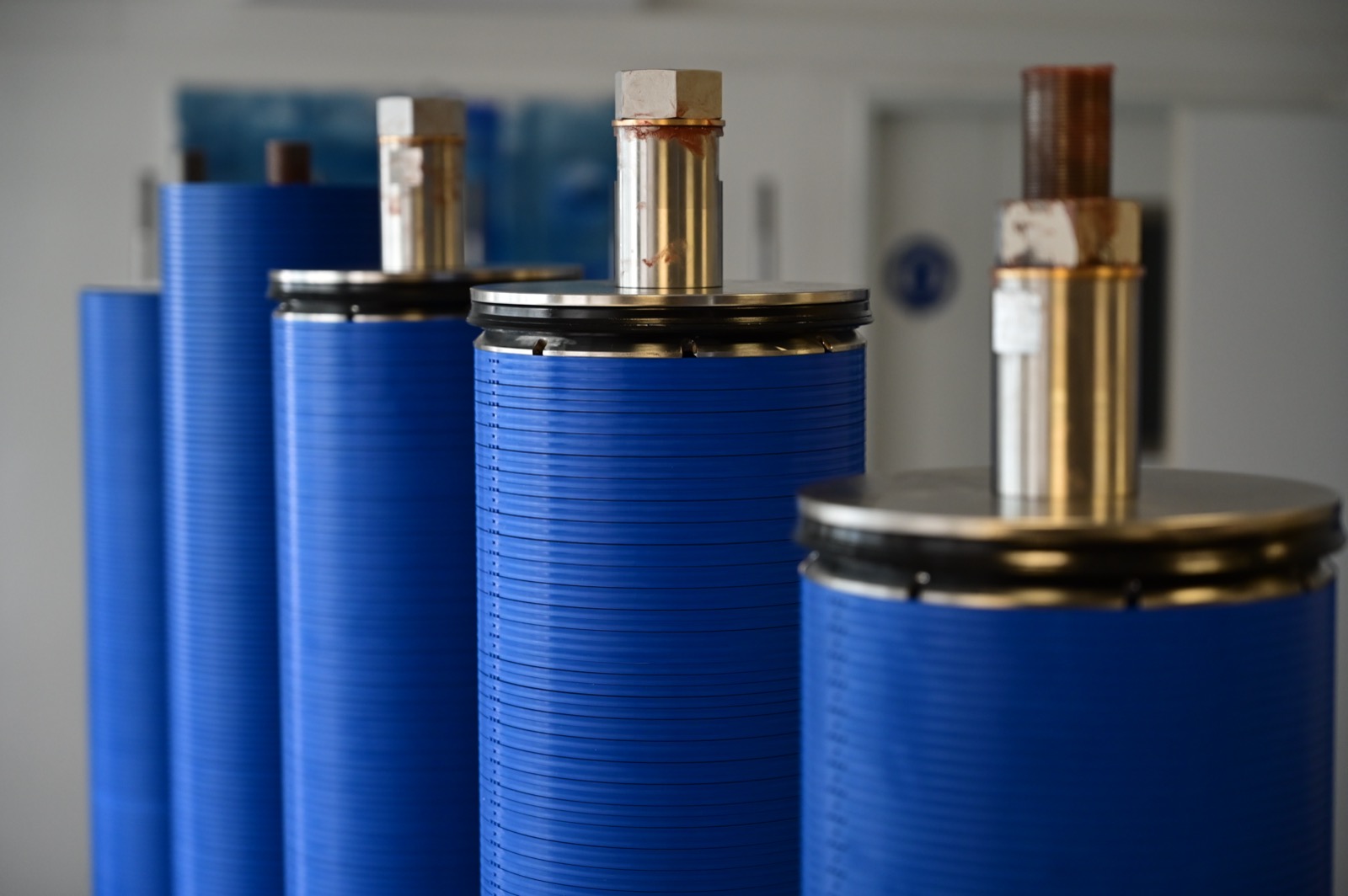
RCDT disc-tube systems are designed for difficult water streams and robust operating conditions. Whether and how they should form part of a PFAS treatment concept must always be assessed against the actual analysis, treatment target and intended concentrate route. No single technology is a universal remediation solution.
From filtration to responsibility for the entire material flow
PFAS treatment is strongest when it is understood as a material-flow task. The objective is not only a clean treated-water stream. Controlled management of the retained substances through to safe further treatment or disposal is equally important.
ROTREAT develops modular treatment concepts for demanding industrial wastewater and landfill leachate. Our approach combines analysis, suitable pretreatment, robust membrane technology, cleanability and concentrate management into a site-specific overall solution.
Sources
SWR/Tagesschau: Carcinogenic PFAS around Frankfurt-Hahn Airport, with no solution in sight (German)
US EPA: Reducing PFAS in Drinking Water with Treatment Technologies