Why landfill leachate is different
Landfill leachate is one of the more demanding wastewater streams in environmental and waste-management engineering. It is formed when precipitation and moisture pass through waste bodies, technical barriers and landfill structures, taking up dissolved substances along the way.
Its composition can vary strongly depending on the site, age of the landfill, waste type, precipitation and operating conditions. This variability is exactly what makes treatment technically demanding.
More than a standard wastewater stream
Landfill leachate can contain high salt loads, organic matter, nitrogen compounds, heavy metals and persistent organic substances. Micropollutants such as PFAS are also receiving increasing attention from regulators, operators and the public.
This does not mean that every site has the same contamination profile. It does mean, however, that landfill leachate should not be treated like a conventional municipal wastewater stream.
For operators, the key question is therefore not simply whether treatment is required. The decisive question is which treatment concept fits the specific water, the discharge conditions and long-term operation.
Where standard solutions reach their limits
Many conventional treatment systems are designed for comparatively stable feed streams. Landfill leachate behaves differently. Concentrations can fluctuate, conductivity may be high, organic substances can be difficult to degrade and scaling or fouling can complicate operation.
A robust concept therefore has to bring several points together: water analysis and realistic assessment of feed quality, suitable pre-treatment, robust membrane stages or combined processes, an appropriate cleaning strategy, good service access and flexibility for changing operating conditions.
In long-term operation, theoretical separation performance is only one part of the decision. The system also has to remain stable, maintainable and economically sensible under real conditions.
The role of membrane processes and RCDT technology
Membrane processes such as reverse osmosis can play an important role when dissolved substances, salinity or micropollutants need to be reduced. With difficult feed waters, however, the design of the membrane system is crucial.
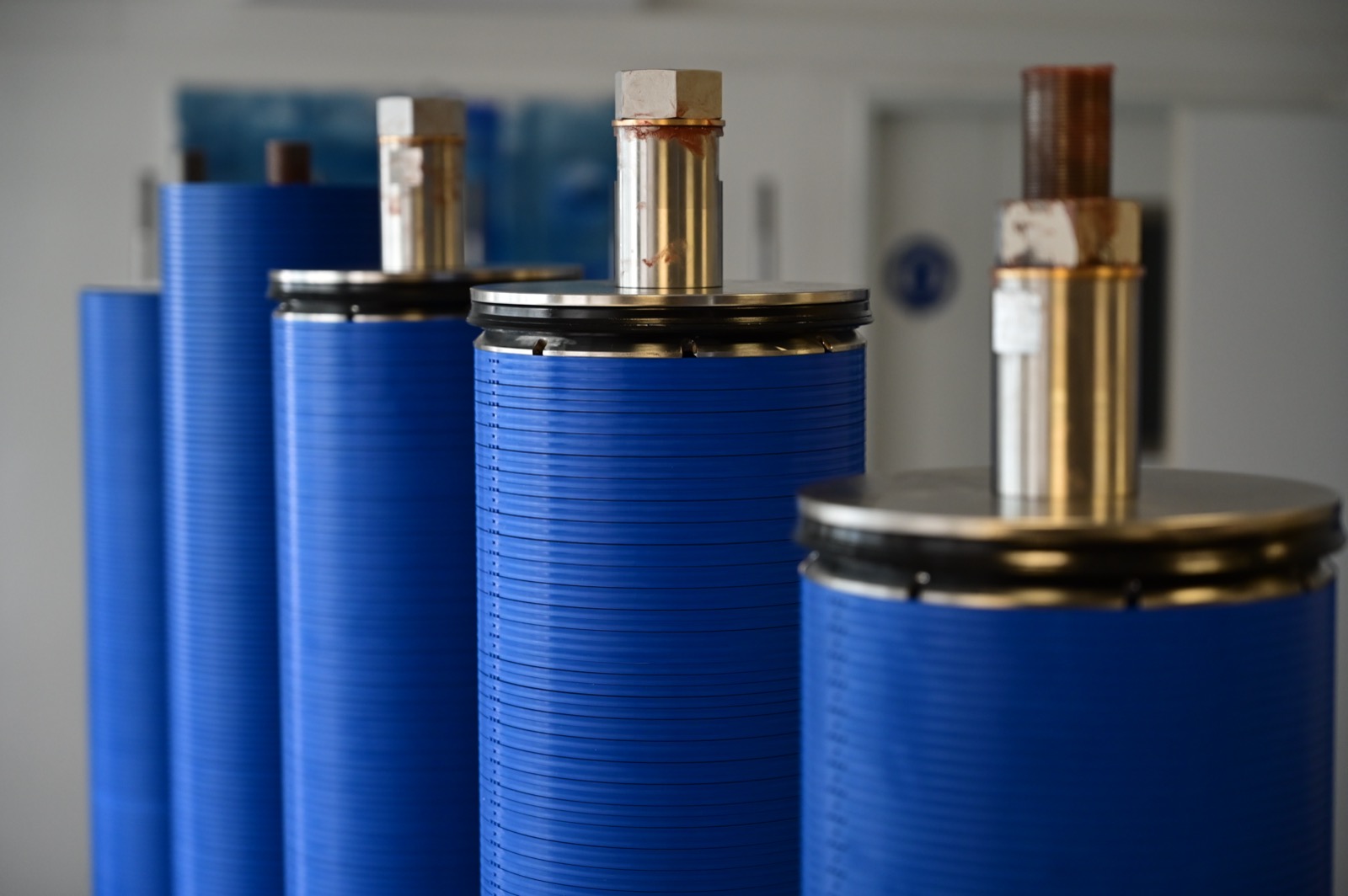
RCDT disc tube technology was developed for demanding water streams. Its open flow path and service-friendly module design can provide advantages where standard spiral-wound modules reach their limits or where cleaning and operational reliability are critical.
Combined with suitable pre-treatment, multi-stage concepts and a realistic operating strategy, even difficult leachate streams can be made technically manageable.
The ROTREAT approach
ROTREAT develops and supports membrane systems for demanding wastewater applications. These include landfill leachate, industrial wastewater, modular container plants and combined treatment concepts.
The approach always starts with the specific water: Which parameters are critical? Which discharge or reuse targets apply? Which fluctuations are expected in operation? Which cleaning and maintenance steps must be practically possible?
These questions lead to a treatment concept that does not only work technically, but can also be operated sensibly over time.
Conclusion
Landfill leachate is not a standard wastewater task. It requires careful assessment, robust processes and a treatment concept that fits the real feed-water quality.
The decisive question is therefore not only whether landfill leachate has to be treated. The decisive question is how it can be treated so that environmental requirements, operational reliability and long-term responsibility fit together.