A current report renews the discussion
A report from the environmental organisation New York River Watch estimates that approximately 532.3 million gallons of landfill leachate were sent to municipal wastewater treatment plants each year between 2019 and 2023. The report was compiled using public records and information obtained through Freedom of Information Law requests.
According to the published reporting, around 167 million gallons were sent to facilities that discharge into waterways designated as drinking water sources. The same article explicitly states that monitoring had not found regulated contaminants above drinking water standards.
What the report does and does not say
The available information should not be used to claim that drinking water contamination has occurred. It does, however, raise a legitimate technical question: are municipal wastewater treatment plants always the appropriate destination for complex landfill leachate?
Municipal treatment plants are primarily designed for domestic sewage. Transferring leachate to these facilities does not automatically provide the treatment required for every contaminant or concentration.
Leachate is not conventional municipal wastewater
Landfill leachate forms when rainwater and snowmelt pass through deposited waste. Its composition depends on the type and age of the waste, local precipitation and landfill operation.
The resulting wastewater may contain organic compounds, metals, PFAS, pesticides and other industrial chemicals. Concentrations and hydraulic loads can also change considerably over time.
Treatment should follow the actual water composition
A suitable treatment concept starts with representative sampling and a detailed analysis of the leachate. The process can then be designed around the measured contaminants, concentrations, variability and required discharge quality.
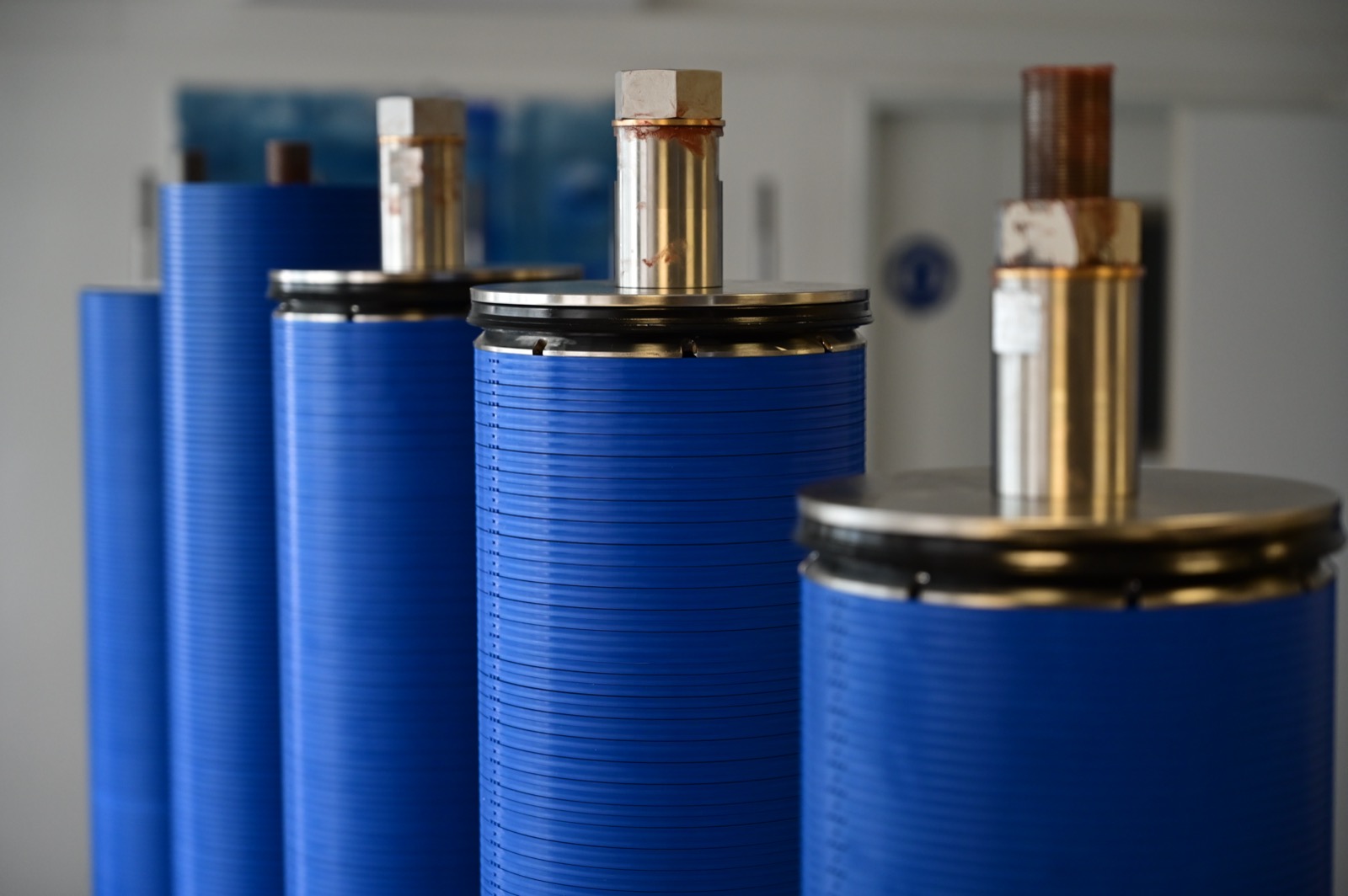
Depending on the application, the solution may combine appropriate chemical and physical pretreatment, robust membrane stages, reverse osmosis with RCDT disc-tube modules, controlled concentrate handling and continuous monitoring of treatment performance.
RCDT technology is particularly suited to demanding wastewater streams because its open-channel disc-tube configuration can handle conditions that are difficult for conventional spiral-wound membrane systems.
The ROTREAT approach
ROTREAT develops modular, multi-stage systems for landfill leachate and other complex industrial wastewater streams. Each system is designed according to the actual water composition and the required treatment objective.
The current discussion in New York illustrates a principle that applies internationally: landfill leachate requires a dedicated and verifiable treatment strategy. The goal is not simply to move the wastewater elsewhere, but to treat it according to its specific characteristics.